
Saturday, October 13, 2007


* World Classic Gallery *

* HENRI MATISSE *
BIOGRAPHY and PAINTINGS Matisse, Henri 1869 - 1954

France
Matisse was born in Le Cateau-Cambrésis in northern France on December 31, 1869. The son of a middle-class family, Matisse studied and began to practice law. In 1890, however, while recovering slowly from an attack of appendicitis, he became intrigued by the practice of painting. In 1892, having given up his law career, Matisse went to Paris to study art formally. Matisse joined Gustave Moreau’s studio at the Ecole des Beaux-Arts where he met Camoin, Manguin, Marquet and Jean Puy.
Matisse's first teachers were academically trained and relatively conservative; Matisse’s own early style was a conventional form of naturalism, and he made many reproductions after the old masters. Matisse also studied more contemporary art, especially that of the impressionists, and he began to experiment, earning a reputation as a rebellious member of his studio classes.
Matisse’s true artistic liberation, in terms of the use of color to render forms and organize spatial planes, came about first through the influence of the French painters Paul Gauguin and Paul Cézanne and the Dutch artist Vincent van Gogh, whose paintings Matisse studied closely beginning about 1899. Then, in 1903 and 1904, Matisse encountered the pointillist painting of Henri Edmond Cross and Paul Signac. Cross and Signac were experimenting with juxtaposing small strokes (often dots or “points”) of pure pigment to create the strongest visual vibration of intense color. Matisse adopted their technique and modified it repeatedly, using broader strokes.
By 1905 Matisse had produced some of the boldest paintings ever created, including a striking painting of his wife, Green Stripe (Madame Matisse) (1905, Statens Museum for Kunst, Copenhagen). The title refers to a broad stroke of brilliant green that defines Madame Matisse’s brow and nose. In the same year Matisse exhibited this and similar paintings along with paintings by his artist companions, including Andre Derain and Maurice de Vlaminck. Together, the group was dubbed les fauves (literally, “the wild beasts”) because of the extremes of emotionalism in which they seemed to have indulged, their use of vivid colors, and their distortion of shapes.
While Matisse was regarded as a leader of radicalism in the arts, Matisse was beginning to gain the approval of a number of influential critics and collectors, including the American expatriate writer Gertrude Stein and her family. Among the many important commissions Matisse received was that of a Russian collector who requested mural panels illustrating dance and music (both completed in 1911; now in the Hermitage, Saint Petersburg).
Such broadly conceived themes ideally suited Matisse; they allowed him freedom of invention and play of form and expression. Matisse paintings of dancers, and of human figures in general, convey expressive form first and the particular details of anatomy only secondarily. Matisse extended this principle into other fields; his bronze sculptures, like his drawings and works in several graphic media, reveal the same expressive contours seen in his paintings.
Although intellectually sophisticated, Matisse always emphasized the importance of instinct and intuition in the production of a work of art. Matisse argued that an artist did not have complete control over color and form; instead, colors, shapes, and lines would come to dictate to the sensitive artist how they might be employed in relation to one another. Matisse often emphasized his joy in abandoning himself to the play of the forces of color and design, and he explained the rhythmic, but distorted, forms of many of his figures in terms of the working out of a total pictorial harmony.
From the 1920s until his death, Matisse spent much time in the south of France, particularly Nice, painting local scene paintings with a thin, fluid application of bright color. In his old age, Matisse was commissioned to design the decoration of the small Chapel of Saint-Marie du Rosaire at Vence (near Cannes), which he completed between 1947 and 1951. Often bedridden during his last years, Matisse occupied himself with decoupage, creating paintings of brilliantly colored paper cutouts arranged casually, but with an unfailing eye for design, on a canvas surface.
Matisse died in Nice on November 3, 1954. Unlike many artists, Matisse was internationally popular during his lifetime, enjoying the favor of collectors, art critics, and the younger generation of artists.

The Red Room,1908, Oil on canvas, 220x180 cm

Dance, 1912, Oil on canvas, 190x114 cm

Family Portrait, 1911, Oil on canvas, 194x143 cm

Fruits, 1901, Oil on canvas, 61x51 cm

Blue Still Life, 1901, Oil on canvas, 73x59 cm

Study for Le Bonheur de vivre, 1905, Watercolor on paper mounted on board, 25.4 x 32 cm

The Dance, 1910, Oil on canvas, 391x260 cm

Untitled


New Ku Klux Klan
It is now obvious that the decision to release to the public the recordings and the stenograms emerging by investigations against two ex ministers and one businessman belongs to  Traian Basescu.
  Daniel Morar, a head of the DNA (National Anti-Corruption Department), a remnant of
  Monica Macovei, admitted it officially that he had provided the documentation to the President, since the Cotroceni commission had been suspended and then dismembered. The commission would have been the only one entitled to get the documentation. The President claimed having put it in the safe and not having taking it out. He also expressed a too early opinion by claiming in the documentation there were "proves" much more serious than the ones released. As I know our President's past, I can only conclude that he released the criminal inquiry documents before the people at stake were announced about these documents or even before an official inquiry started. As for Daniel Morar, he broke the law - how many times did he do this? - by giving information on the progress of some cases to the head of state, which is a power in state different from Justice. The question is the following: why does Traian Basescu have this obsession, very harmful for Justice and democratic institutions, that inquiries and trails must be held in the public square instead of in the institutions meant for it ? Why are there face-covered people who behave like some Ku Klux Klan members, inciting people to play courts, thus arranging the public execution of some political adversaries ?
This view and this anti-democratic practice originate in Traian Basescu's past. He was an intelligence officer and it was then that he got accustomed to instruments other than the transparent ones to accomplish missions. Secondly, while a ship captain before 1989, he was in charge of a special kind of economic unit. While far from the country and subordinate to military regulation, Traian Basescu took action imitating Nicolae Ceausescu, just like a small dictator. Occult operations prevailed instead of law instruments. This is why he got into conflict with the crew many a time. Most ship captains had a triple status: 1. a head of a special group, the most visible status; 2. an officer or collaborator of the ex Securitate (Communist Secret Service in Romania); 3. a smuggler. And there were no exceptions to the rule. All the captains of ship and aircrews used to bring products, sometime banned products, to the country without paying the customs fees, in order to make a better living. The ex Secutitate would pretend not to see it. In those years it was the way some ex Securitate collaborators were paid. Traian Basescu's entire education and experience are subordinate to these "values". After 1989, Traian Basescu was investigated several times. He was suspected of being the reason why Romania's strategic fleet went extinct. This time as an "objective", he was faced with the repressive state institutions harassing him, using the inherited mechanisms and procedures.
We can therefore understand why Traian Basescu says one thing and does the other when state institutions are at stake. Given his previous experience, Justice is to be disdained and its methods are out of date or even harmful. Therefore Justice must be replaced with something else, which is why the secret services and the prosecutors enjoy the President's full protection as long as they please him. And Justice is Cinderella.
But how can there be inquiries and executions without Justice ? They can be held in the public market by media lynching. His political adversaries are no longer investigated on, but just pointed to, humiliated, sentenced and subject to public rebuke. It is the new Ku Klux Klan. When Justice reaches verdict, it will be too late.
Sorin Rosca Stanescu
Ziua Saturday 13 october 2007 http://www.ziua.net/english
 Traian Basescu.
  Daniel Morar, a head of the DNA (National Anti-Corruption Department), a remnant of
  Monica Macovei, admitted it officially that he had provided the documentation to the President, since the Cotroceni commission had been suspended and then dismembered. The commission would have been the only one entitled to get the documentation. The President claimed having put it in the safe and not having taking it out. He also expressed a too early opinion by claiming in the documentation there were "proves" much more serious than the ones released. As I know our President's past, I can only conclude that he released the criminal inquiry documents before the people at stake were announced about these documents or even before an official inquiry started. As for Daniel Morar, he broke the law - how many times did he do this? - by giving information on the progress of some cases to the head of state, which is a power in state different from Justice. The question is the following: why does Traian Basescu have this obsession, very harmful for Justice and democratic institutions, that inquiries and trails must be held in the public square instead of in the institutions meant for it ? Why are there face-covered people who behave like some Ku Klux Klan members, inciting people to play courts, thus arranging the public execution of some political adversaries ?
This view and this anti-democratic practice originate in Traian Basescu's past. He was an intelligence officer and it was then that he got accustomed to instruments other than the transparent ones to accomplish missions.
 Secondly, while a ship captain before 1989, he was in charge of a special kind of economic unit. While far from the country and subordinate to military regulation, Traian Basescu took action imitating Nicolae Ceausescu, just like a small dictator. Occult operations prevailed instead of law instruments. This is why he got into conflict with the crew many a time. Most ship captains had a triple status: 1. a head of a special group, the most visible status; 2. an officer or collaborator of the ex Securitate (Communist Secret Service in Romania); 3. a smuggler. And there were no exceptions to the rule. All the captains of ship and aircrews used to bring products, sometime banned products, to the country without paying the customs fees, in order to make a better living. The ex Secutitate would pretend not to see it. In those years it was the way some ex Securitate collaborators were paid. Traian Basescu's entire education and experience are subordinate to these "values". After 1989, Traian Basescu was investigated several times. He was suspected of being the reason why Romania's strategic fleet went extinct. This time as an "objective", he was faced with the repressive state institutions harassing him, using the inherited mechanisms and procedures.
We can therefore understand why Traian Basescu says one thing and does the other when state institutions are at stake. Given his previous experience, Justice is to be disdained and its methods are out of date or even harmful. Therefore Justice must be replaced with something else, which is why the secret services and the prosecutors enjoy the President's full protection as long as they please him. And Justice is Cinderella.
But how can there be inquiries and executions without Justice ? They can be held in the public market by media lynching. His political adversaries are no longer investigated on, but just pointed to, humiliated, sentenced and subject to public rebuke. It is the new Ku Klux Klan. When Justice reaches verdict, it will be too late.
Sorin Rosca Stanescu
Ziua Saturday 13 october 2007 http://www.ziua.net/english
Show the warrants !
The bugging of the phones belonging to businessman Gheorghe Ciorba, which led to the ex minister Muresan and also to the ex agriculture minister Remes raises questions on the legality of the phone calls interception, as no institution admits doing it.
The Remes-Muresan case is still shrouded in mystery. Apart from the controversies on the authenticity of the evidence unveiled so far, proving that ex minister Remes took the bribe or not, there are more details that need clarifications. One of it is the legal grounds for intercepting the phone calls of businessman Gheorghe Ciorba and watching him. As known, he was the key element targeted and they got to the ex minister Muresan and Remes. (...)
It is certain that both the National Anti-Corruption Department and the Romanian Secret Service should tell which institution intercepted the businessman's phone calls, so that they would do away with all doubt. They should explain who asked that he be watched and due to which warrants, if there were any.
 On the other hand, the recording showing Remes, Muresan and Ciorba was broadcast again and yesterday some more recordings came out. They show images of Muresan and Ciorba and phone calls between the two, as well as some phone calls to Steluta, the wife of Decebal Traian Remes. But this time it was not the Public Television that released the recording, but the www.hotnews.ro, an Internet servant of Romanian Presidency. Last Monday the same website announced the Public Television was going to broadcast the first recording to show minister Remes taking bribe. You can watch this latest recording on www.ziua.to.
D.E.I.
Ziua Saturday 13 october 2007 http://www.ziua.net/english
The Remes-Muresan case is still shrouded in mystery. Apart from the controversies on the authenticity of the evidence unveiled so far, proving that ex minister Remes took the bribe or not, there are more details that need clarifications. One of it is the legal grounds for intercepting the phone calls of businessman Gheorghe Ciorba and watching him. As known, he was the key element targeted and they got to the ex minister Muresan and Remes. (...)
It is certain that both the National Anti-Corruption Department and the Romanian Secret Service should tell which institution intercepted the businessman's phone calls, so that they would do away with all doubt. They should explain who asked that he be watched and due to which warrants, if there were any.
 On the other hand, the recording showing Remes, Muresan and Ciorba was broadcast again and yesterday some more recordings came out. They show images of Muresan and Ciorba and phone calls between the two, as well as some phone calls to Steluta, the wife of Decebal Traian Remes. But this time it was not the Public Television that released the recording, but the www.hotnews.ro, an Internet servant of Romanian Presidency. Last Monday the same website announced the Public Television was going to broadcast the first recording to show minister Remes taking bribe. You can watch this latest recording on www.ziua.to.
D.E.I.
Ziua Saturday 13 october 2007 http://www.ziua.net/english
Pensions come first
 According to Romanians, the raise of pensions and wages (48%), scarce jobs (25%) and health (19%) are the main priorities the present government should settle by the end of 2008, according to a poll released by Gallup Organization last September, at request from the Governmental Strategy Agency.
According to the research, Romanians think the government managed to meet their expectations in fields like foreign affairs (28%) and pensions (27%). On the other hand, agriculture (22%), health (21%) and education (15%) are the main fields the government should check on more.
As far as the approaching election of MEPs is concerned, almost a half of the Romanians say they are sure to go voting under any circumstances.
Ovidiu Banches
Ziua Saturday 13 october 2007 http://www.ziua.net/english
* READ THIS !!! *

Hello ! Friends & Visitors

Starting next Monday the Daily NEWS & COMMENTS will be presentet in a NEW format !!!
This new improvement will gave to any reader the opportynity to select his/her preffered article by simply pushing the right-link added.
Here bellow we illustrate with an sample the NEW presentation formula
EDITORIALS
“President X said this” – here -
“President X said yesterday that him….“
“Parliament has addopted the Law of…“ – here -
“Yesterday, the Romanian Parliament has addopted the Law of…“
And so on….
COMMENTARIES
“War & Peace between Cotroceni and Victoria Palaces” – here -
“Yesterday, the War between Cotroceni and Victoria Palaces has become…“
“Democrat PMs wants initiate a new bill against Government” – here -
“The Democrats says they want to initiate a new bill against Government…“
And so on….
We hope that this NEW formula will gain Your accept so we wish to All of U: ENJOY IT !!!

[mig007]
Friday, October 12, 2007


Romanian President: It is impossible it should have come from me
Yesterday the President of Romania 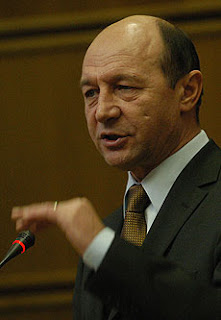 Traian Basescu demanded
  PM Calin Popescu-Tariceanu to urgently appoint a competent person to head the Ministry of Agriculture and he warned the PM publicly that the dismemberment of the DNA (National Anti-Corruption Department) would lead to the application of the safeguard clause on Romanian Justice. The government denied such intention at once. The President also announced that he had just signed the decree to suspend agriculture minister Decebal Traian Remes.
President Basescu warned: "It is essential that neither the Romanians nor the authorities in Brussels should take the PM for a politician deadlocking Justice. I am warning him publicly that a measure such as the dismemberment of the DNA may lead to the activation of the safeguard clause on Justice". He mentioned he was expressing such warning because of information claiming the government was intending to do it by means of an emergency ordinance. The President added: "The government is certainly taking efforts to protect present ministers under suspicion". But he apologized, in case the information was not true.
"The President has got no reason for such attitude and his response to the press shows how democratic he is. Such a thing couldn't have happened in a civilized state and I think civil society must react strongly. He is actually sending an undemocratic message to his own electorate, probably also because after the scandal with the reporter from Antena 1 channel his popularity has been growing. After the referendum he has shown a certain nervousness because of failing to capitalize his popularity and overthrow the government. Although not aggressed, he is aggressive, which is impossible to understand. Basescu reiterates offenses against the press, although he enjoyed press support. Things were calm around him that moment and he had no reason to get irritated".
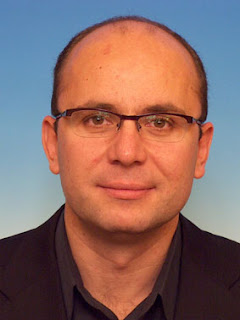-Ex-PD-Ex-SecrGenPSD.jpg) Cozmin Gusa, a leader of the National Initiative Party, commented yesterday: "The government is plotting something very serious these days: an emergency ordinance to pass next week and stipulate the unification of the activities performed by the DNA, the Department to Prevent Organized Criminality and Terrorism and the General Information Department in the Ministry of Defense into one single department, to be headed by someone close to the Liberal government, at present an adviser of the interior minister Cristian David".
Cozmin Gusa, a leader of the National Initiative Party, commented yesterday: "The government is plotting something very serious these days: an emergency ordinance to pass next week and stipulate the unification of the activities performed by the DNA, the Department to Prevent Organized Criminality and Terrorism and the General Information Department in the Ministry of Defense into one single department, to be headed by someone close to the Liberal government, at present an adviser of the interior minister Cristian David".
Camelia Spataru, a spokeswoman for the Romanian government, announced at once that the government had no intention to dismember the DNA, like the President was claiming. She mentioned the government had already denied all press rumor on a "so-called emergency ordinance to dismember the DNA before the President's statement yesterday". The spokeswoman just added: "PM Tariceanu is accepting Traian Basescu's apologizes for releasing untrue information. The sources misinformed him, unfortunately".
Anca Hriban
Ziua friday 12 october 2007 http://www.ziua.net/english
 Traian Basescu demanded
  PM Calin Popescu-Tariceanu to urgently appoint a competent person to head the Ministry of Agriculture and he warned the PM publicly that the dismemberment of the DNA (National Anti-Corruption Department) would lead to the application of the safeguard clause on Romanian Justice. The government denied such intention at once. The President also announced that he had just signed the decree to suspend agriculture minister Decebal Traian Remes.
President Basescu warned: "It is essential that neither the Romanians nor the authorities in Brussels should take the PM for a politician deadlocking Justice. I am warning him publicly that a measure such as the dismemberment of the DNA may lead to the activation of the safeguard clause on Justice". He mentioned he was expressing such warning because of information claiming the government was intending to do it by means of an emergency ordinance. The President added: "The government is certainly taking efforts to protect present ministers under suspicion". But he apologized, in case the information was not true.
"The President has got no reason for such attitude and his response to the press shows how democratic he is. Such a thing couldn't have happened in a civilized state and I think civil society must react strongly. He is actually sending an undemocratic message to his own electorate, probably also because after the scandal with the reporter from Antena 1 channel his popularity has been growing. After the referendum he has shown a certain nervousness because of failing to capitalize his popularity and overthrow the government. Although not aggressed, he is aggressive, which is impossible to understand. Basescu reiterates offenses against the press, although he enjoyed press support. Things were calm around him that moment and he had no reason to get irritated".
-Ex-PD-Ex-SecrGenPSD.jpg) Cozmin Gusa, a leader of the National Initiative Party, commented yesterday: "The government is plotting something very serious these days: an emergency ordinance to pass next week and stipulate the unification of the activities performed by the DNA, the Department to Prevent Organized Criminality and Terrorism and the General Information Department in the Ministry of Defense into one single department, to be headed by someone close to the Liberal government, at present an adviser of the interior minister Cristian David".
Cozmin Gusa, a leader of the National Initiative Party, commented yesterday: "The government is plotting something very serious these days: an emergency ordinance to pass next week and stipulate the unification of the activities performed by the DNA, the Department to Prevent Organized Criminality and Terrorism and the General Information Department in the Ministry of Defense into one single department, to be headed by someone close to the Liberal government, at present an adviser of the interior minister Cristian David".Camelia Spataru, a spokeswoman for the Romanian government, announced at once that the government had no intention to dismember the DNA, like the President was claiming. She mentioned the government had already denied all press rumor on a "so-called emergency ordinance to dismember the DNA before the President's statement yesterday". The spokeswoman just added: "PM Tariceanu is accepting Traian Basescu's apologizes for releasing untrue information. The sources misinformed him, unfortunately".
Anca Hriban
Ziua friday 12 october 2007 http://www.ziua.net/english
Source and evidence
By trying to put the blame for a very severe misdeed on someone else, 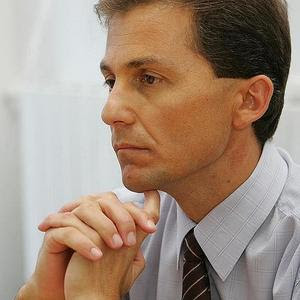 Daniel Morar, a head of DNA (National Anti-Corruption Department), actually put the blame on
 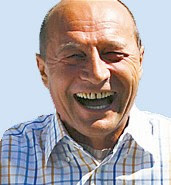 Traian Basescu. In fact, he pointed to the President as the source that unveiled in the open the recording allegedly incriminating minister Remes and ex minister Muresan. While Robert Turcescu, host of the TV talk show, was pressing him, Daniel Morar kept on denying that the documents had leaked to the Romanian Public Television from the prosecutor handling the case or from himself. And this is how the head of the DNA made it plain that the respective document had reached Cotroceni Palace. It is common logic that shows the guilty must be sought for in Cotroceni Palace, at the highest level, since it was not prosecutors who plotted the fake.
According to the law, the release of materials thought to be evidence is sanctioned because the law bans such a practice. There are at least two reasons for it. The unveiling of information is risky for the success of the inquiry and it may jeopardize the prosecutor's work. On the other hand, until the respective information turns into relevant evidence, meaning judicial proves, until the proves become part of an indictment to reach court after the accused has learned about the indictment, to release such information to the public means to break the presumption of innocence, to nail to the wall people who may prove innocent and compromise their honor and public credibility.
In the first case, if the person under watch is indeed guilty, he gets away with it because of procedure break. Therefore the law protects both the progress of investigations and citizens' basic rights. This is why law breaks are severely punished, no matter who commits them. Since the President keeps silent, we can only admit that Daniel Morar is right. Therefore it was from Cotroceni Palace that the information leaked to the Romanian Public Television.
But how come the recording broadcast on this channel last Wednesday had reached Cotroceni Palace ? Why did Daniel Morar send it there and to whom ? We know that the so-called evidence against Remes and Muresan was recorded in the last week of September. And this was the last time the members of the commission established to decide whether certain officials should be investigated or not got together. The commission was suspended because of minister Chiuariu's argument that several commission members were in a conflict of interests. Secondly, the commission was simply dismembered by means of the government's emergency ordinance. Therefore the recording couldn't have been meant for a ghost commission in Cotroceni Palace. Than for whom ?
The answer to this question is the key to several mysteries of the recent past. It was Traian Basescu who started the trend of investigations made on TV, of disclosing information from cases in progress, not part of indictments. While browsing the information he used to get at Cotroceni Palace as head of state, the President broke both the rule of the game and the law several times, by releasing via some press mercenaries information true or faked in order to compromise people he took for adversaries. It has been a kind of ritualistic exercise. Sometimes Traian Basescu made use of such information overtly, in his own statements.
This time it is as clear as daylight that Traian Basescu is the source of this disclosing. And he must be sanctioned for it. But Daniel Morar is guilty too. He too broke the law when providing the President with such documents, since the President hasn't got the constitutional right to stick his nose in criminal cases.
As for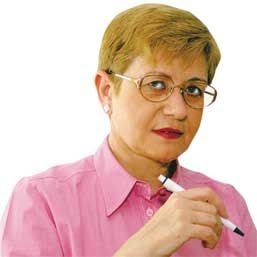 the public television, an institution we pay for, it had no right to participate in obvious manipulation originating from an illegal deed, even if it was the head of state himself who had done it.
Sorin Rosca Stanescu
Ziua friday 12 october 2007 http://www.ziua.net/english
 Daniel Morar, a head of DNA (National Anti-Corruption Department), actually put the blame on
  Traian Basescu. In fact, he pointed to the President as the source that unveiled in the open the recording allegedly incriminating minister Remes and ex minister Muresan. While Robert Turcescu, host of the TV talk show, was pressing him, Daniel Morar kept on denying that the documents had leaked to the Romanian Public Television from the prosecutor handling the case or from himself. And this is how the head of the DNA made it plain that the respective document had reached Cotroceni Palace. It is common logic that shows the guilty must be sought for in Cotroceni Palace, at the highest level, since it was not prosecutors who plotted the fake.
According to the law, the release of materials thought to be evidence is sanctioned because the law bans such a practice. There are at least two reasons for it. The unveiling of information is risky for the success of the inquiry and it may jeopardize the prosecutor's work. On the other hand, until the respective information turns into relevant evidence, meaning judicial proves, until the proves become part of an indictment to reach court after the accused has learned about the indictment, to release such information to the public means to break the presumption of innocence, to nail to the wall people who may prove innocent and compromise their honor and public credibility.
In the first case, if the person under watch is indeed guilty, he gets away with it because of procedure break. Therefore the law protects both the progress of investigations and citizens' basic rights. This is why law breaks are severely punished, no matter who commits them. Since the President keeps silent, we can only admit that Daniel Morar is right. Therefore it was from Cotroceni Palace that the information leaked to the Romanian Public Television.
But how come the recording broadcast on this channel last Wednesday had reached Cotroceni Palace ? Why did Daniel Morar send it there and to whom ? We know that the so-called evidence against Remes and Muresan was recorded in the last week of September. And this was the last time the members of the commission established to decide whether certain officials should be investigated or not got together. The commission was suspended because of minister Chiuariu's argument that several commission members were in a conflict of interests. Secondly, the commission was simply dismembered by means of the government's emergency ordinance. Therefore the recording couldn't have been meant for a ghost commission in Cotroceni Palace. Than for whom ?
The answer to this question is the key to several mysteries of the recent past. It was Traian Basescu who started the trend of investigations made on TV, of disclosing information from cases in progress, not part of indictments. While browsing the information he used to get at Cotroceni Palace as head of state, the President broke both the rule of the game and the law several times, by releasing via some press mercenaries information true or faked in order to compromise people he took for adversaries. It has been a kind of ritualistic exercise. Sometimes Traian Basescu made use of such information overtly, in his own statements.
This time it is as clear as daylight that Traian Basescu is the source of this disclosing. And he must be sanctioned for it. But Daniel Morar is guilty too. He too broke the law when providing the President with such documents, since the President hasn't got the constitutional right to stick his nose in criminal cases.
As for
 the public television, an institution we pay for, it had no right to participate in obvious manipulation originating from an illegal deed, even if it was the head of state himself who had done it.
Sorin Rosca Stanescu
Ziua friday 12 october 2007 http://www.ziua.net/english
Suspect no. 1
The President of Romania 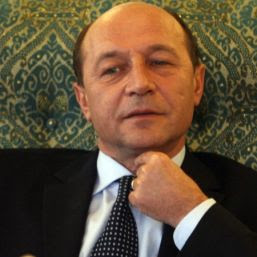 Traian Basescu told the nation that the recording released on the Public Television didn't originate in the presidential safe. Still all the clues show it was him who ordered the plot.
Yesterday morning the President commented that, to the entire political class, he was the "suspect on duty". In the evening he said the evidence had reached his presidential safe, but that it was not him who had disclosed it.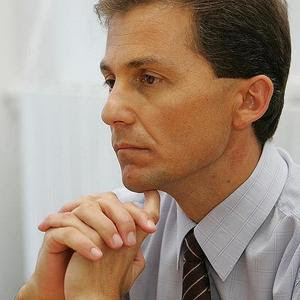 Daniel Morar, a head of the Anti-Corruption Department, also claimed that the evidence had not originated from the institution he ruled and he blamed the progress of the inquiry on his employees. Prosecutors Claudiu Dumitrescu and Lucian Papici had the legal means to search and arrest the agriculture minister Decebal Traian Remes, but they didn't do it, which is unexplainable. They preferred the media show, a political strike for Traian Basescu, to Justice. The result followed at once: minister Remes resigned.
The Superior Council of Magistracy started investigations to detect the source of the leaking information. On the other hand,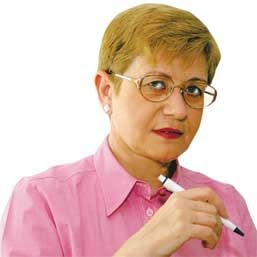 Rodica Culcer, a coordinator of the News Department in the Romanian Public Television, says everything was legal and she mentions the Public Television is in the habit of censoring materials.
The National Council for Audio and Visual Media addressed the Prosecutor's Office on the break of human rights and of the Criminal Procedure Code.
As for the international press, there are commentaries on this latest high level corruption case in Romania and on the European Commission's warning about the state of Romanian agriculture. (...)
Razvan Savaliuc
Ziua friday 12 october 2007 http://www.ziua.net/english
 Traian Basescu told the nation that the recording released on the Public Television didn't originate in the presidential safe. Still all the clues show it was him who ordered the plot.
Yesterday morning the President commented that, to the entire political class, he was the "suspect on duty". In the evening he said the evidence had reached his presidential safe, but that it was not him who had disclosed it.
 Daniel Morar, a head of the Anti-Corruption Department, also claimed that the evidence had not originated from the institution he ruled and he blamed the progress of the inquiry on his employees. Prosecutors Claudiu Dumitrescu and Lucian Papici had the legal means to search and arrest the agriculture minister Decebal Traian Remes, but they didn't do it, which is unexplainable. They preferred the media show, a political strike for Traian Basescu, to Justice. The result followed at once: minister Remes resigned.
The Superior Council of Magistracy started investigations to detect the source of the leaking information. On the other hand,
 Rodica Culcer, a coordinator of the News Department in the Romanian Public Television, says everything was legal and she mentions the Public Television is in the habit of censoring materials.
The National Council for Audio and Visual Media addressed the Prosecutor's Office on the break of human rights and of the Criminal Procedure Code.
As for the international press, there are commentaries on this latest high level corruption case in Romania and on the European Commission's warning about the state of Romanian agriculture. (...)
Razvan Savaliuc
Ziua friday 12 october 2007 http://www.ziua.net/english
Subscribe to:
Posts (Atom)


.jpg)


