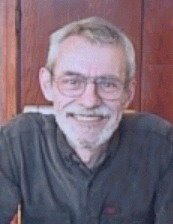
The Patriarch Teoctist would have survived, claimed his personal doctor, the man who had taken care of the Church official for two decades. Nicolae Ursea is a Ph.D. in medical sciences a GP and an expert in nephrology. He claims the doctor heading the team who performed the surgery on the Patriarch Teoctist had lied to him about the latter's state of health, at times when it was more than critical.
Professor Ursea takes distance from his colleague's opinions and he explains he wouldn't have recommended the surgery performed last Monday, because the Patriarch was suffering from a urinary infection to be treated by antibiotics rather than by surgery.
One more clue showing the Patriarch didn't know the surgery stood 50% chances to succeed is that he didn't proceed to confession and communion, which is unimaginable in the case of a monk aged 92. ZIUA demands the Prosecutor's Office should open official inquiry.
N.U.: I took care of him. I was his personal doctor for 21 years... Medically speaking, there were two things: 1. Not to touch him without talking to his personal doctor. They should have called me and brought me next to him from wherever I was. 2. He wasn't anybody, there should have been consultations among experts. He was suffering from urinary infection and this is why he was urinating often... They should have treated the infection, waited for a few days and then... Three weeks ago he had an episode of the kind too. I treated the infection and the frequent urinating faded... But then it came back... They should have treated it again and waited... If he needed to be operated here, we would have proceeded to the medical tests and so on...
Rep.: Did he need to be balanced and were they to bring the blood pressure back to normal ?
N.U.: Of course. What should I say? (...) I phoned Sinescu and I asked him last Monday: "I hear you did the surgery, sir". He answered: "No, I didn't". But the surgery had been performed and he was dead.
Rep.: What time was this ?
N.U.: It was 12:30. "No, I didn't do the surgery". And then I said: "Please call me when you do". He answered: "Yes, I will let you know when I do it".
Rep.: Well, this is something very serious... They kept you away from him deliberately...
N.U.: Yes, they did... (...)
Rep.: How could he ?
N.U.: He could. He dared lied to me, he dared not call me and so on. This is unacceptable. In deontological terms, one may not perform a surgery on someone when he has got a personal doctor. He was a personality, not just anyone... I kept his heart and brain all right for 21 years.
Rep.: And, thanks God, he was perfectly well...
N.U.: He was perfectly well. I took care of him appropriately and I draw a treatment scheme and he used to come... We had become friends, you know...
Rep.: Had there been no infection...
N.U.: They shouldn't have performed the surgery for a urinary infection. (...)
Rep.: We hear he would spit blood. Do you think complications might have emerged, by any chance ?
N.U.: Yes, probably.
Rep.: They didn't do the basic tests, the X-raying....
N.U.: He says they did the basic ones. That's what he says...
Rep.: I asked at the hospital about it: they would have had no time for the X-rays, because the X-ray women starts work at 9.
N.U.: He had all the medical tests done three weeks ago in the Carol Davila hospital. I had them all done. He had an infection, I proceeded to treatment, I fixed it and everything was all right. The infection came back. He needed an anti-infection treatment and then they should have talked about surgery.
Rep.: Why were they in such a hurry ?
N.U.: I don't know why they were in such a hurry. Why ? They lied to me on the phone, saying there was no surgery... Such an exceptionally valuable man, God's true envoy on Earth. So kind, so gentle, such a noble soul...
Rep.: Therefore we can say he would have survived...
N.U.: Yes, he would have survived... Without calling his personal doctor ? This is unacceptable. It is elementary. They should have called me to talk about it and I wouldn't have recommended the surgery.
Victor Roncea & Lidia Popescu
Ziua Vineri 03 Iulie 2007 http://www.ziua.net/english
Friday, August 03, 2007


Basescu and PD regress
Did parliamentary elections take place next Sunday, the PD (Democrat Party) would get 43% of votes and the PSD (Social-Democrat Party) would reach only 17%, according to the latest opinion poll by IMAS, accomplished in July 8-17.
According to the research, the PNL (National Liberal Party) would get 11% and the PNG (New Generation Party) would reach 10%. 5% of Romania's electors would vote for the UDMR (Democrat Union of Magyars in Romania) and 5% for the PRM ("Greater Romania" Party). The PLD (Liberal-Democrat Party) would reach some 4% and the PC (Conservative Party) just 2%.
As far as trust is concerned, President Traian Basescu tops the list due to 51% and Gigi Becali comes next with 34%, followed by Theodor Stolojan (28%). 17% is the score for Mircea Geoana, Calin Popescu Tariceanu and Emil Boc.
Trust in the Romanian President has lost 5% and the PD has lost 7% as compared to last month, the study shows. PM Tariceanu enjoys 4% more and the PSD has gained 2% more as compared to June. (...)
Roxana Andronic
Ziua Vineri 03 Iulie 2007 http://www.ziua.net/english
According to the research, the PNL (National Liberal Party) would get 11% and the PNG (New Generation Party) would reach 10%. 5% of Romania's electors would vote for the UDMR (Democrat Union of Magyars in Romania) and 5% for the PRM ("Greater Romania" Party). The PLD (Liberal-Democrat Party) would reach some 4% and the PC (Conservative Party) just 2%.
As far as trust is concerned, President Traian Basescu tops the list due to 51% and Gigi Becali comes next with 34%, followed by Theodor Stolojan (28%). 17% is the score for Mircea Geoana, Calin Popescu Tariceanu and Emil Boc.
Trust in the Romanian President has lost 5% and the PD has lost 7% as compared to last month, the study shows. PM Tariceanu enjoys 4% more and the PSD has gained 2% more as compared to June. (...)
Roxana Andronic
Ziua Vineri 03 Iulie 2007 http://www.ziua.net/english
Terrifying rudeness

A nation can be respected if it respects itself. Respect for its greatest personalities, those who made its history and identity, is one extent of it.
As far as we are concerned, it isn't always so, unfortunately. It may be painful and, furthermore, it may be a clue showing the level of civilization and maturity reached by our society. This is what counts in the international eye first. Then there count the other components of the definition: political, economic, social, military and security.
As normal, society has had a deep response to the death of the Patriarch Teoctist. It was also normal that the Romanian government should declare Friday to be a national day of mourning, in order to properly emphasize the exceptional importance and vital contribution of His Beatitude the Patriarch Teoctist, paid in the 21 years of guiding the Romanian Orthodox Church.
Unfortunately, Dumitru Dragomir, a deputy representing the "Greater Romania" Party and a president of the Romanian Soccer League, announced boycott of the government's decision, informing the soccer games would take place as scheduled. The boss of his party, a man very Christian in his public stance, didn't protest in any way. And no one protested in any way: no one who paid a last homage by the coffin of the Patriarch Teoctist, no one who signed condolence letters. You know those letters forwarded to all the press agencies at once so that they will reach the news as soon as possible. This is how our politicians are like: they know so, they feel so and they do so.
The very serious problem emerging at this point is the powerlessness of the state and state structures to impose obedience to a decision as essential as the one on the national day of mourning. The deep crisis of authority Romania is going through allows for defiance of any decision because of the very autonomous areas, very numerous, in which the one who holds local power can very well defy central authorities. Very authoritative in his field, Dumitru Dragomir shows the world not only his utter disgust with the moral values which he theoretically committed to respect by his membership of the "Greater Romania" Party, but also the fact that in today's Romania he may very well care about nothing.
Do you fancy that, when in France there was a national day of mourning when General de Gaulle was interred, they were playing soccer games and the public opinion or the political class didn't express strong opposition ? And let's hit the other side of international politics for an example. Do you fancy Italy housed any sports competition the day Pope John Paul II was interred ?
All the Romanian politicians who will be attending the funeral should feel deeply humiliated by the attitude of Dumitru Dragomir, a member of the Romanian Parliament, by his terrifying rudeness. But only in case they haven't got tickets accompanied by an invitation to the Golden Blitz Restaurant, which is good for opinion polls.
It is not the Romanian people who should feel shamed. Those thousands and thousands of Romanians who queued to pay a last tribute by the coffin show the worth of the respect and common sense that need to be admitted as such. It is the others who are a problem. In fact, they are a huge problem, just like the destructive, dramatic and spreading rudeness they embody.
Cristian Unteanu
Ziua Vineri 03 Iulie 2007 http://www.ziua.net/english
Romania asked to send troops to Sudan
Romanian received a solicitation to sent troops to Darfur, Sudan. Unofficial sources say it comes from French authorities.
Romanian military experts are now analyzing the solicitation. Depending on the financial resources available and the international mission commitments the Ministry of Defense has got, a technical report is to be sent to the Supreme Council for National Defenses so that a political decision will be made.
Right now there are 1,492 Romanian soldiers in missions abroad. Most of them (660) are in Afghanistan and Iraq (492). (...)
D.D.
Ziua Vineri 03 Iulie 2007 http://www.ziua.net/english
Romanian military experts are now analyzing the solicitation. Depending on the financial resources available and the international mission commitments the Ministry of Defense has got, a technical report is to be sent to the Supreme Council for National Defenses so that a political decision will be made.
Right now there are 1,492 Romanian soldiers in missions abroad. Most of them (660) are in Afghanistan and Iraq (492). (...)
D.D.
Ziua Vineri 03 Iulie 2007 http://www.ziua.net/english
An energy tax for Europe
George W. Bush's disastrous war in Iraq has put Europe in a bind. The United States long has been Europe's protector. Now, because of a war it wanted no part of, Europe finds its security undermined.
Chaos in Iraq has empowered Iran - a much more dangerous country for Europe than Iraq ever was. And, with America bogged down in Iraq, Russian President Vladimir Putin has resurrected Soviet-style bullying tactics. Would Russia otherwise have dared to threaten to re-direct its nuclear missiles at European cities ?
Not only has Bush destroyed Iran's most formidable enemy and bogged down US troops in a hopeless cause; he also has enriched energy-abundant Iran and Russia by pursuing a war that has dramatically raised energy prices. High crude oil prices make it easier for Iran to build nuclear weapons and for Russia to use energy blackmail to threaten Europe.
But Europe can fight back. By imposing a stiff tax on energy consumption, Europeans would reduce both consumption of energy and its price in world markets, in turn cutting the flow of funds to Russia and Iran.
Because crude oil is priced in US dollars, and the dollar has depreciated against the euro, European consumers have gotten off relatively easy from rising energy prices. So an energy tax roughly equal to the euro's 33% appreciation in recent years would be about right.
Europeans might be forgiven for thinking that the Americans, who pumped up oil prices in the first place with their military misadventure in Iraq, should be the ones who "pump it down" with an energy tax. But, with a "Texas oil man" in the White House, it won't happen. Perhaps after 2008, the politics in America will change in favor of an energy tax, but such a tax is needed now.
Besides, given the strength of environmentalism in Europe, the issue is tailor-made for Europeans to take the lead. Moreover, Europeans do not narrowly equate national security with military spending. They know that confiscating the checkbooks of Russia and Iran would probably make the world a lot safer than building another submarine or aircraft carrier. Indeed, an energy tax would not only effectively counter the argument that Europeans are "free riders" when it comes to defense; it would be tantamount to defense leadership.
Still, with the amount of real resources transferred to their governments already high, Europeans might balk at a further increase. That is why the energy tax must be imposed as a tax substitution, with income or payroll taxes simultaneously reduced to keep real resource transfers to government at a constant level. This would increase economic growth as well as strengthen national security.
Critics who worry about the cost of the energy tax have not thought about tax substitutions. They also do not seem to realize that an energy tax is a much cheaper way for Europe to protect itself from Iran and Russia than alternative means, such as a defense buildup.
Europe currently lacks military muscle because it made a decision a half-century ago to be protected by the US and devote the saved resources to building up its welfare state. This strategy - which worked well for decades - always carried the risk that at some point America's resources might be tied up elsewhere, leaving Europe under-protected. That risk materialized with the Iraq war.
But Europeans are showing little taste for increased defense spending, Iraq or no Iraq. Even France's new president, Nicolas Sarkozy - thought by many to be a pro-American foreign policy hawk - is backing away from his campaign promise to maintain defense spending at 2% of GDP.
In a recent speech to the French defense industry, Sarkozy conspicuously failed to repeat the pledge, instead warning that he soon might cut France's defense budget. According to a respected defense industry publication, Sarkozy changed his mind after his party's smaller-than-anticipated victory in June's parliamentary election.
The reason Europeans are reluctant to increase defense spending is expense. Cutting welfare spending - where the big money is - would be painful. Solemn promises made over the years would have to be broken (people would not get the social services that they paid for with a lifetime of high taxes), lives would be shortened (less money for hospitals and nursing homes), and overall hardship increased.
Even economic growth will not prevent a tradeoff between defense and welfare spending for Europeans. Fifty years of defense dependence on the US has created a powerful "peace industry" in Europe whose primary business is to fight defense spending tooth and nail. They will want to protect all social spending, regardless of the consequences for foreign policy.
A counterweight to the "peace crowd" may be new migrants from Eastern Europe, for whom cuts in social services would break no promises, and for whom job availability and wage levels are more important. But it will take some time before the new migrants gain decisive political influence, and the problems of Iran and Russia for Europe require immediate attention.
In short, Europeans will not allow Bush's Iraq war to become a war on their welfare state. What makes the energy imposed as a tax substitution tax particularly attractive as a defense measure is that it leaves the welfare state intact while making Europe safer, greener, and richer. Why wait ?
Melvyn Krauss is a senior fellow at the Hoover Institution, Stanford University.
www.project-syndicate.org
Melwyn Krauss
Ziua Vineri 03 Iulie 2007 http://www.ziua.net/english
Chaos in Iraq has empowered Iran - a much more dangerous country for Europe than Iraq ever was. And, with America bogged down in Iraq, Russian President Vladimir Putin has resurrected Soviet-style bullying tactics. Would Russia otherwise have dared to threaten to re-direct its nuclear missiles at European cities ?
Not only has Bush destroyed Iran's most formidable enemy and bogged down US troops in a hopeless cause; he also has enriched energy-abundant Iran and Russia by pursuing a war that has dramatically raised energy prices. High crude oil prices make it easier for Iran to build nuclear weapons and for Russia to use energy blackmail to threaten Europe.
But Europe can fight back. By imposing a stiff tax on energy consumption, Europeans would reduce both consumption of energy and its price in world markets, in turn cutting the flow of funds to Russia and Iran.
Because crude oil is priced in US dollars, and the dollar has depreciated against the euro, European consumers have gotten off relatively easy from rising energy prices. So an energy tax roughly equal to the euro's 33% appreciation in recent years would be about right.
Europeans might be forgiven for thinking that the Americans, who pumped up oil prices in the first place with their military misadventure in Iraq, should be the ones who "pump it down" with an energy tax. But, with a "Texas oil man" in the White House, it won't happen. Perhaps after 2008, the politics in America will change in favor of an energy tax, but such a tax is needed now.
Besides, given the strength of environmentalism in Europe, the issue is tailor-made for Europeans to take the lead. Moreover, Europeans do not narrowly equate national security with military spending. They know that confiscating the checkbooks of Russia and Iran would probably make the world a lot safer than building another submarine or aircraft carrier. Indeed, an energy tax would not only effectively counter the argument that Europeans are "free riders" when it comes to defense; it would be tantamount to defense leadership.
Still, with the amount of real resources transferred to their governments already high, Europeans might balk at a further increase. That is why the energy tax must be imposed as a tax substitution, with income or payroll taxes simultaneously reduced to keep real resource transfers to government at a constant level. This would increase economic growth as well as strengthen national security.
Critics who worry about the cost of the energy tax have not thought about tax substitutions. They also do not seem to realize that an energy tax is a much cheaper way for Europe to protect itself from Iran and Russia than alternative means, such as a defense buildup.
Europe currently lacks military muscle because it made a decision a half-century ago to be protected by the US and devote the saved resources to building up its welfare state. This strategy - which worked well for decades - always carried the risk that at some point America's resources might be tied up elsewhere, leaving Europe under-protected. That risk materialized with the Iraq war.
But Europeans are showing little taste for increased defense spending, Iraq or no Iraq. Even France's new president, Nicolas Sarkozy - thought by many to be a pro-American foreign policy hawk - is backing away from his campaign promise to maintain defense spending at 2% of GDP.
In a recent speech to the French defense industry, Sarkozy conspicuously failed to repeat the pledge, instead warning that he soon might cut France's defense budget. According to a respected defense industry publication, Sarkozy changed his mind after his party's smaller-than-anticipated victory in June's parliamentary election.
The reason Europeans are reluctant to increase defense spending is expense. Cutting welfare spending - where the big money is - would be painful. Solemn promises made over the years would have to be broken (people would not get the social services that they paid for with a lifetime of high taxes), lives would be shortened (less money for hospitals and nursing homes), and overall hardship increased.
Even economic growth will not prevent a tradeoff between defense and welfare spending for Europeans. Fifty years of defense dependence on the US has created a powerful "peace industry" in Europe whose primary business is to fight defense spending tooth and nail. They will want to protect all social spending, regardless of the consequences for foreign policy.
A counterweight to the "peace crowd" may be new migrants from Eastern Europe, for whom cuts in social services would break no promises, and for whom job availability and wage levels are more important. But it will take some time before the new migrants gain decisive political influence, and the problems of Iran and Russia for Europe require immediate attention.
In short, Europeans will not allow Bush's Iraq war to become a war on their welfare state. What makes the energy imposed as a tax substitution tax particularly attractive as a defense measure is that it leaves the welfare state intact while making Europe safer, greener, and richer. Why wait ?
Melvyn Krauss is a senior fellow at the Hoover Institution, Stanford University.
www.project-syndicate.org
Melwyn Krauss
Ziua Vineri 03 Iulie 2007 http://www.ziua.net/english
Thursday, August 02, 2007
Foreign Ministry abides by couple pattern


-- Senator Eugen Mihaescu unveils to the ZIUA readers the family related network in the Romanian Ministry of Foreign Affairs.
The senator, a vice president of senators' foreign affairs committee, argues that the 'ambassador husband-councilor wife' pattern seems to prevail in Romanian democracy. It is family networks instead of office relations that control foreign affairs. The senator comments: "They make the secret network in the Romanian Ministry of Foreign Affairs, who does and undoes things. When they get appointed and they are to leave on mission, they approach it socially: 'I have sacrificed myself for the Ministry and for you, Mr. Minister, for so long ! Then get me that job and give my wife one too !' ".
Here are some married couples with high official positions abroad the senator mentions on his list: Ligor in Madrid, Davidoiu in Dublin, Gaginshi in Washington, Mircea in Alger, Rusu recommended for Rome, Stoian recommended for Strasbourg, Matache in London, Sava in Camberra, Montanu in Rio de Janeiro, Cojocaru in Paris. There are also couples of former Communist activists: Buje in Lyon, Opris in Paris.
Senator Eugen Mihaescu is demanding Adrian Cioroianu, Romania's foreign minister, now busy handling the sex scandal bursting out because of ambassadress Manuela Vulpe, to clean Romanian diplomacy so that he would stand a chance to remain in its history. (...)
E.M.
Ziua Joi 02 Iulie 2007 http://www.ziua.net/english
MPs cost thousands of Euro

The IPP (Public Policy Institute) released yesterday a study on the monthly expenses for the activities of Romanian senators and deputies.
One MP may cost us up to 7,425 Euro a month. Senators and deputies on hotel accommodation spend three times more than their colleagues in other dwelling places. In 2006 Romanian deputies spent on trips in the country a quarter more than in 2005.
These are some of the research conclusions unveiled yesterday, after an analysis of MP activity expenses in January 2005-October 2006.
In the study there is emphasized: "The IPP does not want to insinuate that such funds are necessarily too large, but to outline the need for total transparency on such expenses, which the parliamentarians should be the first to stimulate". (...)
Roxana Andronic
Ziua Joi 02 Iulie 2007 http://www.ziua.net/english
Our virtual Middle Ages

-- Wikipedia, the online encyclopedia, is the most impressive collective intellectual project ever attempted - and perhaps achieved. It demands both the attention and the contribution of anyone concerned with the future of knowledge.
Because of the speed with which it has become a fixture in cyberspace, Wikipedia's true significance has gone largely unremarked. Since its sixth anniversary in 2007, Wikipedia has consistently ranked in the top ten most frequently viewed Web sites worldwide. Everyday it is consulted by 7% of all 1.2 billion Internet users, and its rate of usage is growing faster than that of Internet usage as a whole.
Wikipedia is an encyclopedia to which anyone with a modicum of time, articulateness, and computer skills can contribute. Anyone can change any entry or add a new entry, and the results will immediately appear for all to see - and potentially contest.
"Wiki" is a Hawaiian root that was officially added to English in 2007 to signify something done quickly - in this case, changes in the collective body of knowledge. Some 4.7 million "Wikipedians" have now contributed to 5.3 million entries, one-third of which are in English, with the rest in more than 250 other languages. Moreover, there is a relatively large group of hardcore contributors: roughly 75,000 Wikipedians have made at least five contributions in any given 30-day period.
The quality of articles is uneven, as might be expected of a self-organizing process, but it is not uniformly bad. True, topics favored by sex-starved male geeks have been elaborated in disturbingly exquisite detail, while less alluring matters often lie fallow. Nevertheless, according to University of Chicago Law professor Cass Sunstein, Wikipedia is now cited four times more often than the Encyclopedia Britannica in US judicial decisions. Moreover, Nature's 2005 evaluation of the two encyclopedias in terms of comparably developed scientific articles found that Wikipedia averaged four errors to the Britannica's three. That difference probably has been narrowed since then.
Wikipedia's boosters trumpet it as heralding the arrival of "Web 2.0." Whereas "Web 1.0" facilitated the storage and transmission of vast amounts of different kinds of information in cyberspace, "Web 2.0" supposedly renders the whole process interactive, removing the final frontier separating the transmitter and receiver of information. But we have been here before - in fact, for most of human history.
The sharp divide between producers and consumers of knowledge began only about 300 years ago, when book printers secured royal protection for their trade in the face of piracy in a rapidly expanding literary market. The legacy of their success, copyright law, continues to impede attempts to render cyberspace a free marketplace of ideas. Before, there were fewer readers and writers, but they were the same people, and had relatively direct access to each other's work.
Indeed, a much smaller, slower, and more fragmented version of the Wikipedia community came into existence with the rise of universities in twelfth- and thirteenth-century Europe. The large ornamental codices of the early Middle Ages gave way to portable "handbooks" designed for the lighter touch of a quill pen. However, the pages of these books continued to be made of animal hide, which could easily be written over. This often made it difficult to attribute authorship, because a text might consist of a copied lecture in which the copyist's comments were inserted and then perhaps altered as the book passed to other hands.
Wikipedia has remedied many of those technical problems. Any change to an entry automatically generates a historical trace, so entries can be read as what medieval scholars call a "palimpsest," a text that has been successively overwritten. Moreover, "talk pages" provide ample opportunity to discuss actual and possible changes. While Wikipedians do not need to pass around copies of their text - everyone owns a virtual copy - Wikipedia's content policy remains deeply medieval in spirit.
That policy consists of three rules: 1) no original research; 2) a neutral point of view; and 3) verifiability. These rules are designed for people with reference material at their disposal but no authority to evaluate it. Such was the epistemic position of the Middle Ages, which presumed all humans to be mutually equal but subordinate to an inscrutable God. The most one could hope for, then, was a perfectly balanced dialectic. In the Middle Ages, this attitude spawned scholastic disputation. In cyberspace, the same practice, often dismissed as "trolling", remains the backbone of Wikipedia's quality control.
Wikipedia embodies a democratic medievalism that does not respect claims to personal expertise in the absence of verifiable sources. To fully realize this ideal, participation in Wikipedia might be made compulsory for advanced undergraduates and Master's degree candidates worldwide. The expected norms of conduct of these students correspond exactly to Wikipedia's content policy: one is not expected to do original research, but to know where the research material is and how to argue about it.
Compulsory student participation would not only improve Wikipedia's already impressive collective knowledge base, but also might help curb the elitist pretensions of researchers in the global knowledge system.
Steve Fuller is Professor of Sociology at the University of Warwick, United Kingdom. He is the author of The Knowledge Book: Key Concepts in Philosophy, Science and Culture.
www.project-syndicate.org
Steve Fuller
Ziua Joi 02 Iulie 2007 http://www.ziua.net/english
Opinion polls for rulers

Opinion polls prove attractive only at certain times of the political life: main events, electoral campaigns, confrontations, controversies and scandals. They become attractive when the temperature in the public arena grows high, when significant issues are at stake.
Otherwise, such instruments are useful at calm times too. At such times parties' experts proceed to analyses and plan strategies on grounds of estimated percentages. Still it doesn't stir public and media interest.
But why are these times for talking about opinion polls ? What is the issue now, in a summer bringing the heat wave, the drought and the global heating to the foreground ? There is enough time left till the next elections. It is the elections for MEPs, which doesn't seem to make spirits really hot.
Nevertheless, the present is more interesting than the summer holiday makes visible. A few months have elapsed since the referendum on the suspension of President Basescu. The passion faded away. And the confrontation between the head of state and the Democrat Party he comes from on the one hand, and the government together with the opposition on the other hand, has had more hot times, all of them unfavorable to Basescu: the pension law promoted by the Liberals and deadlocked for some time by the President, the Bordei Park controversy, the indifference of Adriean Videanu, a mayor of Bucharest, who was on a leave while the city was under the 'red code'. The elections for seats in Strasbourg are approaching. Local elections are due next summer. Then there follow the parliamentary elections and the presidential ones in 2009. Basescu has been dominating this electoral cycle and the referendum seems to have confirmed that his separation from the Liberals, the allies who have supported him to become a President, looks like a profitable decision. There has been much comment proving this success deceitful, since it was only a third of the electors who voted for Basescu. And all they did was choose a continuation of his mandate, without making an electoral option. But the prevailing general perception is that Basescu was a triumphant winner and that his domination is going on, hence the Democrats' score reaching close to 50% in polls.
Given the recent conflicts, with the Liberals gaining trust from the Romanian retired and the President losing it, polls are starting to show growing and decreasing popularity. According to Gallup, the popular trust Basescu enjoys has gone down from 63% last May (when the referendum was held) to 43% in July (after reaching 59% in June). 40% of the people questioned approve of the way Calin Popescu Tariceanu "uses his attributions as a PM of Romania" ( he got 21% in May, 25% in June). The same question asked about the President's conduct got a positive answer from 60%. As for vote intentions for the election of MEPs, the Democrats enjoy 41%, which means excellent, far from the prospects of making their own government after parliamentary elections. The Social-Democrat Party has got 20% and the National Liberal Party reaches 12%.
But there has also emerged a 'counter opinion poll' by the Public Policy Institute. The differences are big and they favor Basescu's side. A symptom that the competition is growing rougher. Therefore the present times are important because parties get repositioned before the electoral campaign and the vital target is the new government, what else? Unless the Democrats manage to keep the same score and gain majority, both the victory and the power will be on the side of the so-called 'anti-Basescu coalition', no matter how high the score the Democrats get by scrutiny and the President's popularity...
Ion Bogdan Lefter
Ziua joi 02 Iulie 2007 http://www.ziua.net/english
Wednesday, August 01, 2007
Political Patriarch

-- The choice for the future Patriarch of the Romanian Orthodox Church is up to Romanian politicians and businessmen.
In today's edition you can read the structure, kept secret, of the Church's Electoral College. Its members are due to elect the future Patriarch in September 9. 88 out of the 195 members are laymen, but over 70% of them are politically connected. Their polls, conducted by the pre-electoral games played in politics, may be decisive, especially if we take into account the fact that the clergymen in bishoprics are in tight connections with local officials.
On electors' list there are people like Dorel Onaca, a friend of President Basescu's, Social-Democrat Teodor Maghiar, now investigated for corruption, and the business mayor of Giurgiu, Liberal Lucian Iliescu.
Until the new Patriarch is elected his Holiness Daniel will be heading the Romanian Orthodox Church. If the latter decides to run as candidate, His Holiness Corneanu is to take over. (...)
Gusa: Masonry mustn't get involved
Cozmin Gusa, leader of the National Initiative Party, commented yesterday that the great peril related to the Patriarch to take over after the death of the Patriarch Teoctist was the influence of organizations such as the Masonry. Gusa argued: "I don't think an organization such as the Masonry should get involved in the election of officials for the Romanian Orthodox Church. I am not necessarily thinking about the Holy Synod, but about the National Churchly Assembly. Two thirds of the members are laymen and the Masonry has got significant influence over them".
According to the politician, the death of the Patriarch Teoctist is a regrettable event for the Orthodox Church in Romania. He added the death of a man who guided the Church's destiny in the last 21 years was highly important to a National Church such as the Orthodox one. (...)
D.I.
Ziua Miercuri 01 August 2007 http://www.ziua.net/english
Sex ambassadress to come to Bucharest

Manuela Vulpe, a Romanian ambassadress to Mexico, talked to Romania's foreign minister Adrian Cioroianu yesterday, demanding she should come to Bucharest to settle, by juridical means too, some personal matters that might harm the foreign ministry's activity and credibility. It was the Romanian Ministry of Foreign Affairs that announced it yesterday. The press release goes as follows: "Given the situation emerging after her private mail was intercepted and published, Mrs. Ambassadress demanded to return to the headquarters of the Ministry of Foreign Affairs to make clear, by juridical means too, some personal matters that may harm the Ministry's activity and credibility". The minister agreed to Mrs. Vulpe's demand.
In the release the Ministry outlines "this is a personal matter to be settled by Mrs. Manuela Vulpe herself and it does not interfere with Mrs. Ambassadress's professional activity, recognized and appreciated by Ministry officials".
It is to be reminded that the Romanian press received some emails sent and received my Manuela Vulpe, some of them to and from diplomat Teodor Baconsky, at present a presidency adviser recommended to become a Romanian ambassador to France. There is also the mail with Dorin Marian, an adviser of the Romanian PM. The mail with Baconsky includes clues about a possible private relationship. As for the one with Dorin Marian, the ambassedress takes interest in a law granting renters the preemption right to be used in the sale of flats belonging to the RA-APPS.
The private mail of Manuela Vulpe was posted on www.spiritofromania.com by Laurentiu Fulga, now a resident in Australia, where Mrs. Vulpe was an ambassadress before being appointed to Mexico.
D.E.
Ziua Miercuri 01 August 2007 http://www.ziua.net/english
Tuesday, July 31, 2007
Some people's collaboration with ex Securitate may remain unknown

Ladislau Csendes, a president of the CNSAS (National Council for Research on the Communist Secret Service Archive), admitted yesterday for the BBC that some people's collaboration with the ex Securitate (Communist Secret Service in Romanian) might remain unknown, because of the things the CNSAS had failed to accomplish.
This was unveiled last Saturday, when Democrat Razvan Murgeanu, a vice-mayor of Bucharest, admitted for the same BBC that he had signed a collaboration agreement with the ex Securitate when he was 20, but he insisted he hadn't informed against anyone. According to the law, the CNSAS should have checked on the vice-mayor's record in 2004, when he was elected a member of the General Council of Bucharest, which did not happen. But the CNSAS must not check on ex Securitate records in a certain order.
According to the CNSAS president, there are several cases of MPs, judges and more whose records still existed, but were not analyzed. He commented: "Yes, categorically. I know there are such delays. When I saw such great delays, my first idea was to proceed to sanctions and my second was to correct the delays". He confirmed: "It is no pleasure to me, but I am confirming it: this is true. It is us who are now to settle the delays, unfortunately".
Csendes explained: "If the technical staff didn't put some names on the list, then it is about cases of severe neglectfulness." (...)
Anca Hriban
Ziua Marti 31 Iulie 2007 http://www.ziua.net/english
65% of Romanians go for Basescu

The President of Romania Traian Basescu is the main favorite of the electorate, as 65,8% of citizens would vote for him. Mircea Geoana, leader of the PSD (Social-Democrat Party), is second, due to 6,6% and Adrian Nastase, the ex PSD leader, is third (5,5%), according to the opinion poll released by the Public Policy Institute.
According to the research, the Democrat Party tops vote preferences (47,9%). The PSD is next (19,8%). The National Liberal Party is third (9,2%), then there follow the New Generation Party (7,8%) and the "Greater Romania" Party (5,1%).
Most Romanians would participate in a referendum meant to change the means to elect the MPs and they are for a one-Chamber Parliament, the research also mentions.
It is to be noticed that most Romanians don't know those MPs coming from the districts they inhabit, nor have they ever met a senator or deputy.
The research concludes that 65,5% of the population think President Traian Basescu should chair government meetings more often and 78,3% opine he is not dictatorial. 61,6% of Romanians dislike the President's habit of drinking alcohol in public places, whereas 36,8% have got nothing against it.
Roxana Andronic
Ziua Marti 31 Iulie 2007 http://www.ziua.net/english
The imperial way

The Patriarch Teoctist was the most enduring head on the patriarchal throne (21 years) out of the 5 patriarchs Romania had since 1925 till now. In the history of the national Church, he is a record possessor too: 57 years of ceaseless episcopate.
The Patriarch Teoctist is a typically Romanian clergy profile, coming from a family of Moldavian peasants who dedicated one son to monasticism. The Patriarch Teoctist chose monastery life when 15 and he wore the "angel face" until passing to the everlasting life. His connection to the monastery endowed him with that feature specific to the imperial way: vigilant serenity and inner balance.
While an episcope-vicar in Bucharest for 12 years, after being educated at the school of Patriarch Justinian, the Patriarch Teoctist applied the evangelic rule "mild as doves, cautious like snakes" as the beginning of his service to the Church coincided with the arrival of Communism. At that rough times when priests and monks would be thrown behind bars, Church officials had to mime adaptation to the regime. But what they actually did was fight for the survival of the Church deeply rooted in the being of the Romanian people. The caution of the post-war Romanian patriarchs, of patriarch Justianian and the patriarch Teoctist in particular, proved lucid and realistic and this is one reason to mention an imperial way.
The Patriarch Teoctist was a bridge between two difficult epochs. He was annointed in November 16, 1986 and he guarded the National Church for 3 years, under the Communist regime. At times of strong atheism, in the autumn of 1989, when returning from India, the Patriarch Teoctist had the idea to pay a visit to Pope John Paul II, which drove Communist authorities and the Romanian ambassador in Rome crazy. I myself could hear the Patriarch recounting the episode in Caldarusani Monastery in the early December of 1989. The patriarch was aware that Ceausescu would fall. Under the regime following after December 22, 1989, the Patriarch Teoctist proved his skill in not keeping the throne at all costs: in January 18, 1990, he stepped back. But just a few months later, in April, the Church asked him to come back, which he did.
As for the post-communist agitation, the Patriarch and the Synod had to face overwhelming challenges: sect proselytism, strong Catholic pressure and political temptations. Teoctist was no party's man and no politician. He was a clergyman and remained so. The Patriarch and the Synod flattered popular piety by canonizing numerous Romanian saints. They also established lots of monasteries and cloisters and paid attention to theological education.
The Patriarch Teoctist was receptive to the present. He developed the connections with the other Orthodox Churches, he established hundreds of parishes in the Diaspora, he cultivated ecumenical and interreligious dialogue. The Ecumenical Patriarch visited our country about 10 times in the last 17 years and Pope John Paul II could see his dream of brotherly visiting a National Orthodox Church come true due to the Patriarch Teoctist, who strongly opposed the idea that certain politicians should get the laurels. President George W. Bush, the most powerful man on the planet, bowed to him when visiting Romania.
When enshrined on the patriarchal throne, the Patriarch Teoctist confronted reticence. But he is now leaving the world triumphantly. Due to help from the Synod and the faithful, he left a flourishing Church, maybe the most flourishing one among the Orthodox Churches. May God rest him together with the just ones !
Dan Ciachir
Ziua Marti 31 Iulie 2007 http://www.ziua.net/english
Monday, July 30, 2007
Vice-mayor of Bucharest collaborated with ex Securitate

Democrat Razvan Murgeanu, a vice-mayor of Bucharest, admitted for the BBC that he had signed an agreement on collaboration with the ex Securitate (Communist Secret Service in Romania) when he was 20. But he insisted he hadn't actually collaborated. He said that when appointed a vice-mayor he claimed he hadn't been involved in the political police because this was the question on the fill-in forms he had to answer. (...)
Murgeanu said he had been taken to a dungeon together with a foreign colleague and he had been forced into signing for collaboration. He mentioned he hadn't attended any conspiracy meeting he had been summoned to, which can be read in his Securitate record. He added: "They gave me a conspiracy name, but I don't know it. I never wrote anything against anyone for them. It is all written in the record. That officer or what a hell he was came and he wrote: this guy won't write, he won't give a thing, I suggest we should send him out of the information network".
Anca Hriban
Ziua Luni 30 Iulie 2007 http://www.ziua.net/english
Desert Romania

The clime red code now in Romania shouldn't have taken authorities by surprise, because the progress towards boiling temperatures ceased to be a mystery here a long while ago. But given the traditionally poor efficiency of Romanian administration, regardless of hierarchy positions and political orientation, population, cattle and agriculture have all been left in good God's care. Who can make it makes it, who cannot gets registered in minister Nicolaescu's documents as "less insured". The global heating effects are growing more and more visible in Romania. As far as short-term estimations are concerned, the predictable consequences of the heating climate can harm Romania severely. (...)
Given the record temperatures hitting southern Spain, Portugal and Romania, the authorities here, both central and local, had enough reasons to draw strategies and plans to diminish the devastating effects of the drought and heat. But no one in charge of it has cared about the desert menacing to invade a significant part of the Romanian territory.
Climate changes may be irreversible
Experts don't share views on whether the heating of the planet is irreversible or not. Some think it won't lead to the extinction of mankind and human life such as we know them today and they believe this is a transient phenomenon. The others claim the opposite.
Professor Sterie Ciulache, dean of the Meteorology and Hydrology Department in the Faculty of Geography, the University of Bucharest, also a head of the Center for Physics-Geography Research and Environment Impact, argues measures are urgently needed: "Since it is situated in the temperate region of Europe, Romania will reach the same situation reached by the other states in the temperate continental area. It will grow warmer and warmer, there will follow hot summers and floods and fast switching between the two. It may last a few decades. Temperatures may grow either too high or too low as compared to the average. And then everything will get normal again. There are several climatologists and geophysicists who trust this theory. But they believe in the atmosphere system there are retroversion resources, meaning there will follow processes able to neat the climate differences".
Politicians' carelessness
Even if nature can find resources to counter the effects of the true murders politicians commit by killing the environment, things will be worrying for future generations too. The state of things is very serious in Romania, as in the 17 years elapsed since the 1989 Revolution the only positive measure taken was to close down some industrial mammoths because they were great pollution producers.
Romanian authorities have done very little to improve the state of the environment, they have just been glad that Romania can sell fresh air. Professor Ciulache warns: "(...) Measures must be taken now, even if they cost a lot! Stop the deforesting and start massive foresting, especially in southern Romania, but in the mountains too. And there are all the other measures, well known, but too little applied. They can make the heating climate of Romania normal again".
South is most jeopardized
Cristian Hera, a president of the Agriculture and Forestry Sciences "Gheorghe Ionescu-Sisesti" claims agriculture will he harmed by such changes too: "The structure of the plants grown will certainly change, especially the kinds and hybrids to follow in the next 50 years. (...) Rights now the desert coming phenomenon is harming Dobrogea most. But the desert is also reaching the south too. Its intensification depends a lot on the technological culture means to be used. Due to the quality of its soils, Romania can be sure of its food security. But unless forests are grown on large surfaces to prevent the desert from spreading, serious difficulties may follow. In the south there have already come longer and longer times of drought. To diminish their negative effects we must add to the water in the soil water from irrigation". (...)
Saving up water
Experts say it is already time for measures to save up water and use it reasonably. Professor Mircea Dutu, an expert in ecology, explains: "Romania's water resources, limited anyway, will diminish drastically. If things go bad, that is if the heating goes on, Romania should expect terrible consequences, at least in terms of water and food supplies. But unlike in other areas of the planet to become impossible to inhabit, Romanians won't have to leave these lands. Romania won't become impossible to inhabit. But unless adaptation measures are taken as soon as possible, unless this evolution ceases, the future will be gloomy. Adaptation measures must be taken on time: saving up water and using it reasonably, modernization of the irrigation system and adaptation of cultures. They will need many resources, but this is the only way to survive".
Marian Ghiteanu
Ziua Luni 30 Iulie 2007 http://www.ziua.net/english
Saturday, July 28, 2007
Basescu, the retired and the plane

The President of Romania Traian Basescu attended yesterday's Congress to establish the Federation of Romanian Retired Associations and he did it in order o explain his view on the pension law. His messy dialogue with the Romanian retired got applause, opposition and reproaches and it was difficult for the President to keep it under control.
President insists on financial source
The head of state reiterated obsessively his request that the government should mention the financial source for the pension raise due in 2009. He argued: "I can avoid you, if I want to. But I see my mother and parents-in-law every day and it will be hard for me to say 'I lied to you, mother!' " He meant a possibility such as the government not keeping the promise.
The retired would ask him questions at the same time and then they queued for the microphone. One retired woman complained her neighbor's pension was larger and a man who had been a coxswain addressed the President with "Commander" (which pleased him), asking why weren't the additions taken into account for pensions. Basescu suggested they should put it on the Federation's agenda, as he himself would be a beneficiary of it too. The President had several suggestions for the retired there, the most important one pressure on the government so that they would provide a clear and detailed account of the financial sources for the pension raise "Otherwise, you are running the risk of postponements and in the end they will tell you priorities are different", the President concluded.
He thus admitted his concern about the impact of a possibly unkept promise on his own popularity: "My mandate is over in December 2009 and I don't want you to say I lied when promulgating the law." The audience was in frenzy when the head of state announced his preference for the elimination of discrimination from the pension system. He was cheered for "I am a true adept of the unification of the pension system".
Toy aircraft, the Voiculescu kind
But presently things didn't continue as harmoniously. The most embarrassing moment was when he was handed in a paper plane as gift to reproach him for the acquisition of a new presidential aircraft. He commented: "I knew I would get this plane because you talked to Voiculescu and, together with Mr. Iliescu, he encouraged you to do this. But if it is a joke, I give you two more to make. This is the first, maybe there are more coming up".
Still it didn't prevent an elderly lady from reproaching him that the money paid to buy planes could have been used to raise the pensions of the Romanian disabled. Basescu replied: "Nowadays the President flies by a plane built 32 years ago. I don't know how many Romanians would step on such a plane".
The retired attending the meeting were also displeased with the President's reticence to the redistributing of some funds set for development to the social insurance budget. "Money has been wasted on transports", someone cried out in the room.
Adrian Ilie
Ziua Sambata 28 Iulie 2007 http://www.ziua.net/english
US keeps Romanians waiting at the door

US authorities are working on a surprise for their Romanian strategic allies. Together with Poland, Romania may be excluded from the Visa Waiver program that eliminates the visa compulasory if you want to pay a visit to the US. This is because the number of dismissed petitions is over the 10% limit admitted. Warsaw officials expressed disappointment last Thursday, but Bucharest authorities seem to be still working on a response. So far Romania's foreign minister Adrian Cioroianu has just recommended the Romanians wishing to travel to America to ask for visas, provide complete documentation for it and leave the US territory on time.
The International Herald Tribune reported on it yesterday, explaining the solicitations for visas in the two states exceed the 10% limit set in the draft on the Visa Waiver expansion. The number of solicitations for US visas in Romania and Poland is larger than 25%.
According to the statistics in the US State Department, provided by the office of independent senator Joe Lieberman who chaired talks on the final version of this law, in the first 6 months of 2007 countries such as Romania, Poland, Lithuania, Latvia, Slovakia and Hungary didn't meet the requirement. The International Herald Tribune mentions Bucharest and Warsaw are special cases, because the number is over 25%. On the other hand the Czech Republic, Estonia and South Korea meet the US criteria to join the Visa Waiver, the report outlines.
Last Thursday the US Senate passed the final version of this draft on security and visas are no longer required from the citizens of some states who want to travel to the US. The House of Representatives was to pass the draft too yesterday and the President George W. Bush is to promulgate it. (...)
A.M.L.
Ziua Sambata 28 Iulie 2007 http://www.ziua.net/english
High officials, secret emails


One more scandal is making spirits hot in Romania. The private and even very private emails of some high officials were intercepted, then disclosed and then talked about publicly. The reply or the explanation has consisted in the insistent invocation of fraud, which is indeed true, and of the interference in the private life sanctuary. This second point is arguable, especially in a country where the intercepting of mail and phone calls has been a permanent and troubling possibility. Is there a real moral difference between the indiscretion of the secret services, meant for possible blackmails (any person who becomes an official gets subject to it, theoretically) and the indiscretion of an individual turned into a prosecutor and addressing public opinion as jury ? Both types are to be blamed. The potential victims' abnormal, implicit acquiescence is noteworthy in the first case and, in the second one, this brings their protests to derision.
Of course everyone has got the right to respect for their private lives. But on the other hand, a public official, who is the object of all sorts of curiosity due to the nature of his position, must make sure that his private life is inviolable. By protecting himself and avoiding making way for such intrusions, all he does is protect his country, after all. The fact that fragments of some high officials' privacy could be on display for the public eye (probably by primitive technical means) shows their lack of caution. As far as state interests are concerned, this is a lot more severe than the indelicacy of the person who grabbed and got them printed. When a public official, and a diplomat in particular, is guilty of lacking caution, he/ she is no longer worthy of title or official position. And the trust invested in him/ her becomes pointless. To use an ordinary email address, violable by anyone, for messages meant to be confidential is an infantile mistake. Had it happened somewhere else, it would have interrupted the respective people's careers at once.
This unspeakable prose (let me briefly and sadly notice our superiors' so plain style) was certainly translated and read in certain offices of some foreign capital cities some time go. The bad reputation we thus build ourselves in the world and our officials' vulnerable image should have been the first things to trouble us, but not the publication of their poor dialogues in the Romanian press! In case where it was first read the Romanian representatives' mail caused explainable stupor, it is not only because of its contents, which is in between fishy and ridiculous, but first of all because of the spontaneity due to which the emails sent by unsafe ways offered themselves to the eyes of those interested and somehow skilled.
Apart from the moral, juridical or deontological aspects involved, this affair leaves observers, the foreign ones in particular, with the unpleasant feeling that this is because of amateurishness. Therefore we have once again managed not to let down those watching us, ready for critique.
Radu Portocala
Ziua Sambata 28 Iulie 2007 http://www.ziua.net/english
Friday, July 27, 2007

Subscribe to:
Posts (Atom)


.jpg)


